Reliability of pricey new voting machines questioned

By FRANK BAJAK
February 23, 2020

Nearly 1 in 5 U.S. voters will cast ballots this year on devices that look and feel like the discredited paperless voting machines they once used, yet leave a paper record of the vote. But computer security experts are warning that these so-called ballot-marking devices still pose too much of a risk.

Ballot-marking machines were initially developed not as primary vote-casting tools but as “accessible” alternatives for the disabled. They print out paper records that are scanned by optical readers that tabulate the vote.
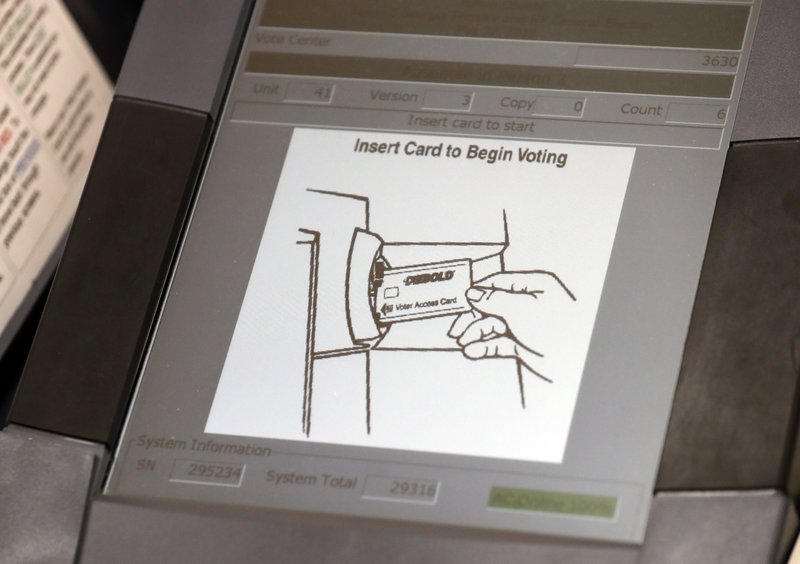
They cost at least twice as much as hand-marked paper ballots, which computer scientists prefer because paper can’t be hacked. That’s an important consideration as U.S. intelligence officials warn that malicious meddling in this year’s presidential contest could be worse than in 2016.

The machines have been vigorously promoted by the trio of privately held voting equipment vendors that control 88 percent of the U.S. market and are nearly unregulated at the federal level. They are expected to be used by some 40 million eligible voters more than in the 2018 midterm elections.

MORE

Experts: US anti-Huawei campaign likely exaggerated


February 28, 2019

By FRANK BAJAK

Since last year, the U.S. has waged a vigorous diplomatic offensive against the Chinese telecommunications giant Huawei, claiming that any nation deploying its gear in next-generation wireless networks is giving Beijing a conduit for espionage or worse.

But security experts say the U.S. government is likely exaggerating that threat. Not only is the U.S. case short on specifics, they say, it glosses over the fact that the Chinese don’t need secret access to Huawei routers to infiltrate global networks that already have notoriously poor security.

State-sponsored hackers have shown no preference for one manufacturer’s technology over another, these experts say. Kremlin-backed hackers, for instance, adroitly exploit internet routers and other networking equipment made by companies that are not Russian.

If the Chinese want to disrupt global networks, “they will do so regardless of the type of equipment you are using,” said Jan-Peter Kleinhans, a researcher at the Berlin think tank Neue Verantwortung Stiftung.

One of the most common U.S. fears — that Huawei might install software “backdoors” in its equipment that Chinese intelligence could use to tap into, eavesdrop on or interrupt data transmissions — strikes some experts as highly unlikely.

Priscilla Moriuchi, who retired from the National Security Agency in 2017 after running its Far East operations, does not believe the Huawei threat is overblown. But she called the odds of the company installing backdoors on behalf of Chinese intelligence “almost zero because of the chance that it would be discovered,” thus exposing Huawei’s complicity.

MORE


APNewsBreak: Georgia election server wiped after suit filed


A computer server crucial to a lawsuit against Georgia election officials was quietly wiped clean by its custodians just after the suit was filed, The Associated Press has learned.

The server’s data was destroyed July 7 by technicians at the Center for Elections Systems at Kennesaw State University, which runs the state’s election system. The data wipe was revealed in an email sent last week from an assistant state attorney general to plaintiffs in the case that was later obtained by the AP. More emails obtained in a public records request confirmed the wipe.

The lawsuit, filed July 3 by a diverse group of election reform advocates, aims to force Georgia to retire its antiquated and heavily criticized election technology. The server in question, which served as a statewide staging location for key election-related data, made national headlines in June after a security expert disclosed a gaping security hole that wasn’t fixed six months after he reported it to election authorities.

READ MORE